On November 13, New College of Florida students and faculty from the Health, Culture, and Societies (HCS) program participated in a high-level panel discussion on robotic-assisted surgery and its impact on modern healthcare at the Kolschowsky Research and Education Institute, Sarasota Memorial Health Care System (SMH). The event highlighted NCF’s distinctive approach to community-engaged research and learning.
Part of the Clinical Innovation Series coordinated by the SMH Medical Library, the event represented a collaboration between the HCS program and SMH. This series serves as a forum for exploring how evidence-based medicine translates from innovative research into state-of-the-art patient care.
The panel discussion attracted more than 110 participants, including physicians and staff at SMHCS as well as students and faculty at New College. It featured four leading robotic surgeons at SMHCS, including M. Blair Marshall, MD, Robert Carey, MD, John Nora, MD and Aaron Carlton, PA. The internationally known panel of clinicians discussed the da Vinci Surgical System, focusing on improving patient safety and healthcare quality, and driving better outcomes and faster recoveries. The panel underscored how healthcare providers are not simply clinicians but also innovators of care and technology. NCF students and faculty joined SMH medical professionals in engaging the panelists with thoughtful questions on the transformation of surgical expertise and the sociocultural implications of robotic surgery. Following the panel discussion, Jessica Depaulo, DNP at SMH and Carlton provided a special tour of the new Center for Simulation and Innovation at the Kolschowsky Research and Education Institute, including the da Vinci Surgical System and the Immersive Room.
Fourth-year Environmental Studies and HCS student Ayden Murphy was particularly impressed by the simulation lab, one of the only places in the country where students have the opportunity to work hands-on with the da Vinci surgical console. “Being within such a unique educational space for this innovative field provided a tangible glimpse into how healthcare will evolve across clinical, technological, and cultural dimensions while broadening the scope of what healthcare can be,” Murphy said.
“This collaboration showcases our program’s approach to active learning with our community health partners,” said Dr. Yidong Gong, Assistant Professor of Anthropology and Co-Director of HCS at New College. “Students get opportunities to engage with cutting-edge experts in the medical field by reflecting on critical insights from the humanities, social sciences, and natural sciences. Such conversations and collaborations are invaluable for our students’ intellectual growth and for immersing them in real-world experiences.”
“We were thrilled to welcome students from New College of Florida. We know the next generation is often the most innovative, and true innovation requires more than just technology. By inviting students who study both the science of medicine and the culture of medicine, we hope to inspire future leaders to innovate a healthcare system where technology and compassionate patient care advance together,” said Yvonne Boudreau, Manager of the SMHCS Medical Library.
Fourth-year Psychology and HCS student Kit Lamison said, “This opportunity provided me a great way to interact with experts in my field and experience innovative technologies. I am very grateful to be part of New College’s HCS program, as this is just one more of an endless list of experiences the program has provided me.”
Prior to this event, the HCS program had organized multiple collaborative activities and engagements with community health partners, such as Sarasota County Mosquito Management Services, Empath Health and Tidewell Hospice, the National Alliance on Mental Illness (NAMI) of Sarasota and Manatee Counties, and the Multicultural Health Institute.
“The field trip to the Kolschowsky Research and Education Institute is notable not only for the traditional educational model of receiving instruction from leaders, medical professionals, and experts at the forefront of their fields, but also for embracing an experiential approach to learning that aligns with New College’s educational philosophy since its inception,” said third-year Anthropology and HCS student Akio D’Oyen-Russ.
About the Health, Culture, and Societies (HCS) Program at New College of Florida
The joint Area of Concentration (AOC) in Health, Culture, and Societies (HCS) was launched in 2020. Funded by a competitive grant from the National Endowment for the Humanities, this program is both interdisciplinary and transdisciplinary, drawing on the combined strengths of the humanities, social sciences, and natural sciences, while fostering strong community engagement and collaboration. Through this program, students gain a broad, critical perspective on health grounded in the liberal arts tradition at New College. The HCS program has built a strong network of community health partners in and beyond Sarasota. Students are well prepared for a wide range of health-related careers. Graduates have been accepted to or enrolled in top programs across the country, including UNC–Chapel Hill, Emory University, Boston University, the University of Florida, and others. In 2022, Rosemary Mejia was named a Public Health Fulbright Scholar. The HCS program also runs an active monthly scholarship colloquium series.
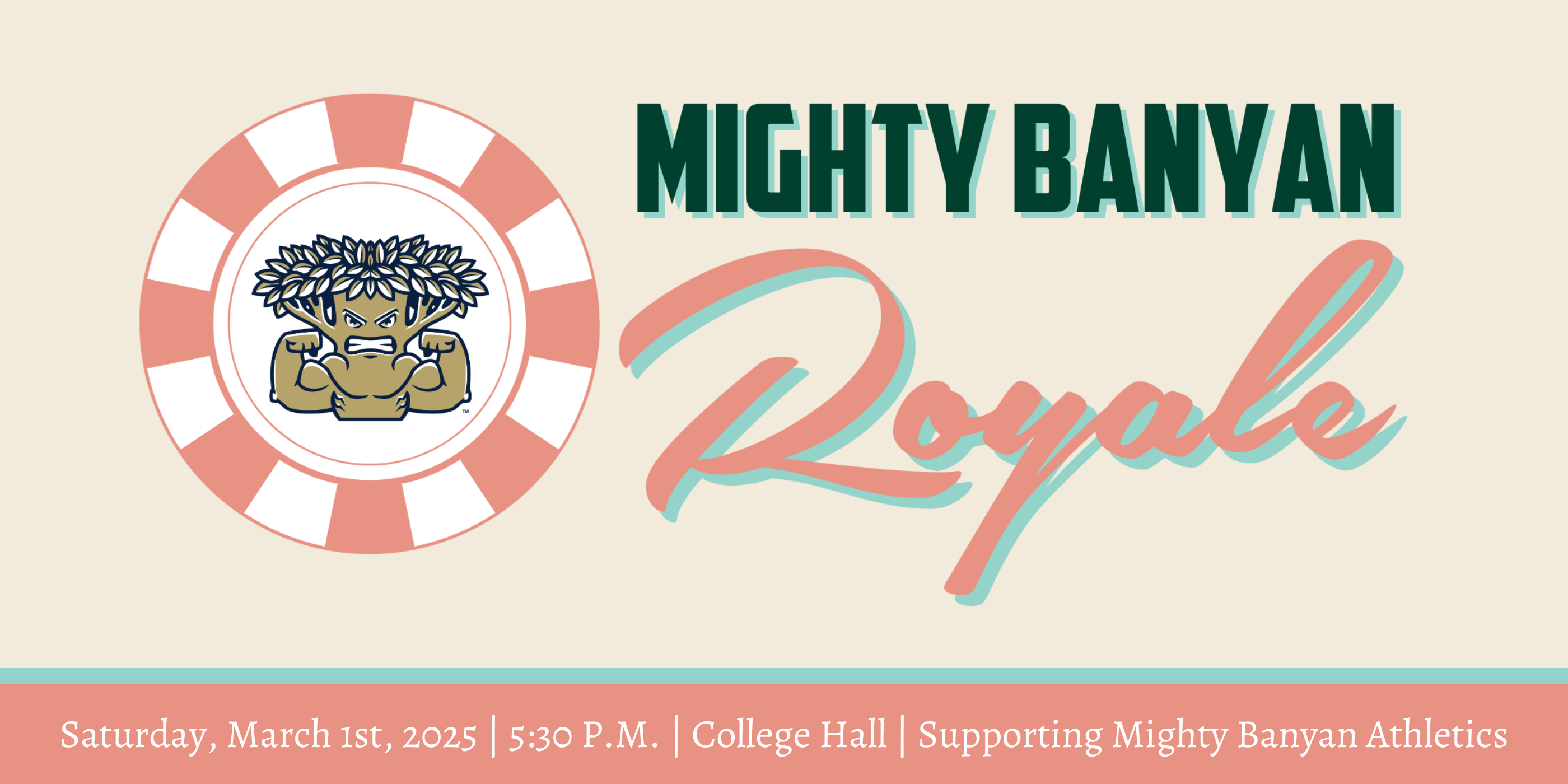
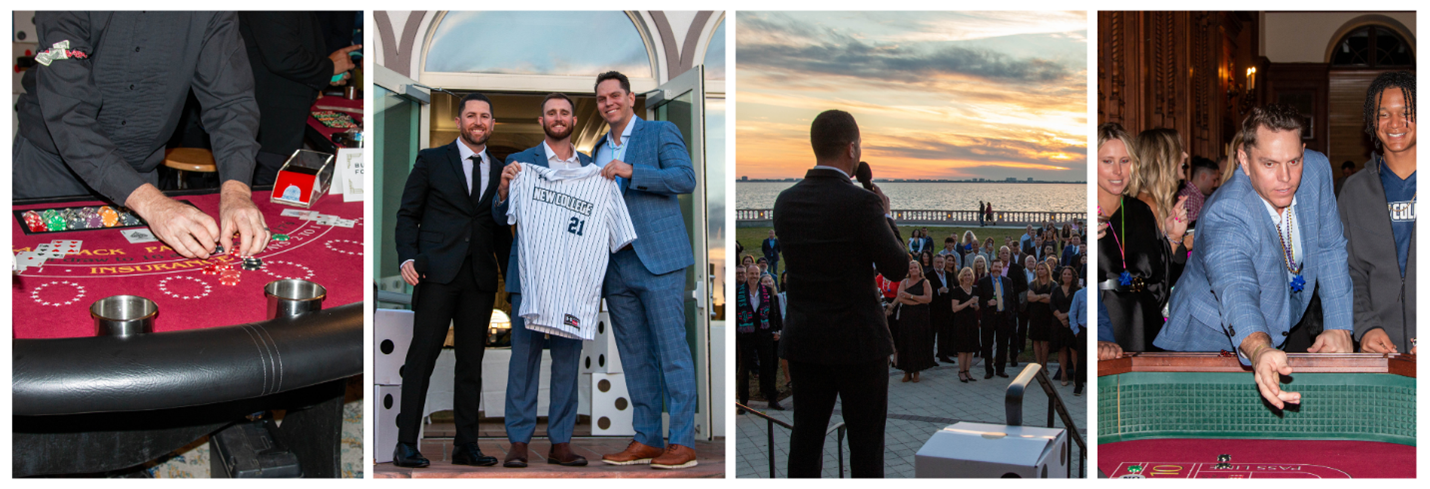
Join Us in Celebrating Two Remarkable Years of Athletics at New College of Florida!
We are excited to celebrate the incredible progress we’ve made in less than two short years. From humble beginnings to unprecedented success, New College’s athletics program has grown exponentially.
From being accepted into the NAIA’s prestigious Sun Conference to our women’s volleyball team earning a spot in the conference playoffs in their very first season, New College athletics has proven that growth and excellence go hand in hand. What started with just six sports has now expanded to over twenty, thanks to the dedication of our talented athletes, the commitment of our exceptional coaches, and the unwavering support of generous donors like you.
We invite you to join us for a special fundraising event that will directly support the growth and excellence of New College’s athletic department. This is your opportunity to ensure that we have the resources needed to compete at the highest level with other top-tier colleges and universities.
With your continued support, we will be able to build a program that is second to none—creating champions both in the classroom and on the playing field.
We look forward to celebrating with you and to what we can achieve together in the years ahead!
Regards,
Mariano Jimenez, Jr.
Vice President, Athletics

Questions? Connect with us!
New College Foundation
Phone Number
Email Address
Location
The Keating Center
Working Hours
M – F
Please call or email for appointment.
Connect
All SWAC lectures are free and open to the public, but reservations are strongly suggested. Please RSVP to [email protected]
U.S. diplomacy faces a combustible mix of challenges that have tested its agility and effectiveness. The domestic hurdles resulting from deep political divisions, a
disorderly international landscape, and multiple wars are unlikely to disappear soon. Nicholas Kralev, foreign correspondent and founding Executive Director of the Washington International Diplomatic Academy, will reflect on American diplomacy’s track record since 2000 and its readiness to navigate and influence today’s complex world, as well as on the impact the U.S. presidential election might have on it. He will also discuss his visits to more than 80 U.S. embassies researching his books, most recently, Diplomatic Tradecraft (Cambridge University Press, 2024).
SARASOTA, Fla. — New College of Florida will host Can Science Save the World? An Evening with Bill Nye and Michael Shellenberger at the Sarasota Opera House on Saturday, September 14, 6:00 – 7:30 p.m. Engineer, comedian, bestselling author, and inventor Bill Nye “The Science Guy” is joined by author and journalist Michael Shellenberger for an eye-opening and informative discussion on how everyday people can improve the world through science. The discussion and audience Q&A will be moderated by Dr. Mark Bauerlein.
Nye is the recipient of 18 Emmy Awards for his work as creator and host of “Bill Nye the Science Guy,” a show that introduced the millennial generation to science and engineering in an entertaining and accessible format. The show, which ran from 1993-1998, was the most-watched educational TV show in the United States during at the time. He remains a prominent figure in science and media, and is a respected champion for scientific literacy.
Shellenberger is the bestselling author of San Fransicko: Why Progressives Ruin Cities and Apocalypse Never: Why Environmental Alarmism Hurts Us All, serves as CBR Chair of Censorship, Politics and Free Speech at the University of Austin, and is the Founder of Public, the number one Substack for News. He is a leading investigative journalist and regularly testifies before and advises governments around the world.
Tickets are available online at https://tickets.sarasotaopera.org/7455/7456. Tickets are $100 general admission, with discounted $25 tickets available to local students with ID. Additional VIP packages are also available. All tickets include valet parking. Current New College students, faculty and staff can reserve complimentary tickets to the event in advance by visiting ncf.edu/socraticstage.
The event marks the first Socratic Stage Dialogue Series event of New College’s Fall 2024 semester. The Socratic Stage, produced by the New College Office of Public Policy Events, seeks to advance civil discourse and engagement through facilitating events that foster open discussion and debate on relevant public policy issues. Such debates or group forums provide opportunity for a wide range of viewpoints and perspectives to be presented.
Learn more about Can Science Save the World? An Evening with Bill Nye and Michael Shellenberger and other upcoming Socratic Stage events at ncf.edu/socraticstage.
The following column was originally published as President Richard Corcoran’s monthly guest column in SRQ Magazine on March 9, 2024.
–
Nestled along the clear blue waters of Sarasota Bay, New College of Florida stands as a beacon of creativity, innovation and academic excellence. As we gear up to launch our Master’s program in Marine Mammal Science, we’re poised to make a meaningful impact locally, stimulating marine-focused economic growth and environmental stewardship in the region for decades to come.
Sarasota Bay boasts one of the most abundant and extensively studied dolphin populations globally, thanks to over five decades of observation by the esteemed Sarasota Dolphin Research Program, a longstanding marine life partner of New College. This enduring research legacy has provided invaluable insights into the behavior and ecology of dolphins, solidifying Sarasota Bay’s reputation as a premier habitat for studying these majestic marine mammals. Through our unique hands-on program, students actively contribute to this research, with underwater listening posts stationed right at our boat dock, offering firsthand experience in marine mammal observation and conservation, from our bayfront classrooms.
Our dedication to marine research is supported by the state-of-the-art Rhoda and Jack Pritzker Marine Biology Research Center, equipped with cutting-edge laboratories and extensive aquatic resources. With the imminent launch of our Master’s program, students will have a seamless transition from undergraduate to postgraduate education under the guidance of our faculty, led by the globally renowned marine life expert and longtime New College faculty member, Dr. Heidi Harley.
Dr. Harley, a distinguished scholar in the field of marine mammal science, brings over two decades of knowledge and experience to our program. Her groundbreaking work in dolphin communication and cognition has earned her international recognition and awards. As the director of the Marine Mammal Science program, Dr. Harley works intimately with our students and conservation partners, mentoring the next generation of marine scientists and shaping the future for marine conservation and research.
What sets New College apart is not only its academic rigor but also its emphasis on real-world experience and interdisciplinary collaboration. Through partnerships with local estuaries, aquariums, sanctuaries and research institutions, students have the opportunity to contribute to the preservation of our oceans and marine ecosystems, while building a thriving ecosystem of new research, innovation and ocean regeneration in Sarasota Bay.
As we await final approval from the State University System Board of Governors, I am confident our Master’s program will become a cornerstone of Florida’s higher education landscape, inspiring future marine mammal scientists and entrepreneurs, and offering unparalleled opportunities for conservation and professional growth.
We invite you to tour our campus and the Marine Mammal Science Center to experience New College firsthand. It’s the foremost marine mammal science program in the United States — and a catalyst for change.